

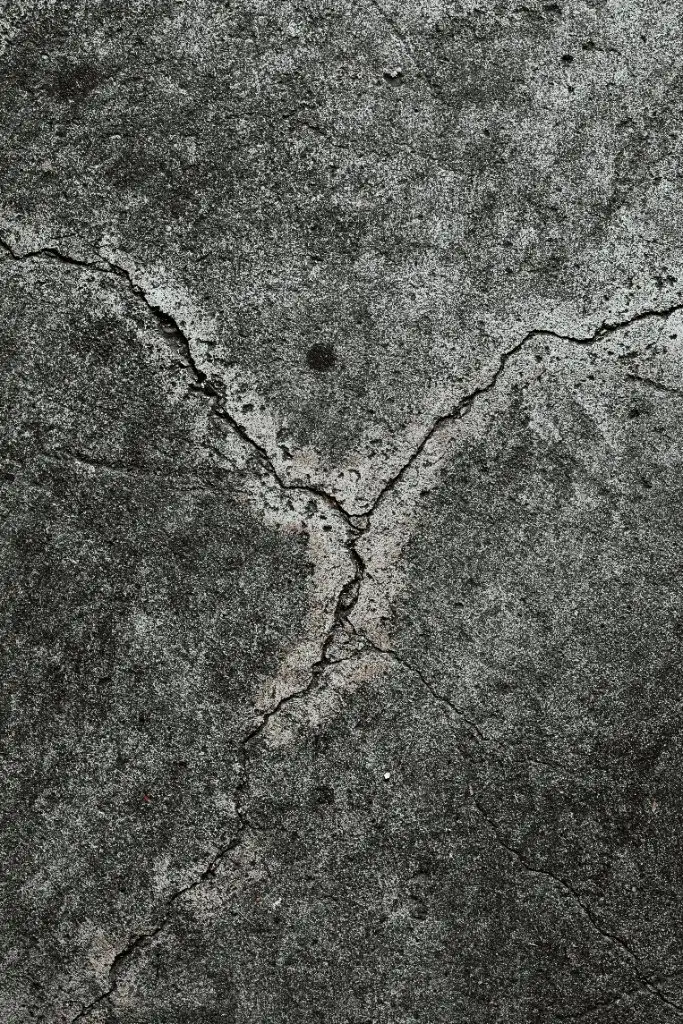
Most failed driveways and patios do not fail because concrete is weak. They fail at the joints, the edges and the low spots, where water sits and the slab is asked to do more than it should.
Keep water moving away
Grade matters more than any product. If water ponds against the slab or runs toward the house, no sealer will change where it ends up.
Check that downspouts discharge away from the concrete, that soil has not been built up against the edges, and that the slab still slopes away from the building.
The joints are the weak point
Control joints are meant to crack, and the sealant in them is meant to be replaced. Once it dries out and pulls away, water runs straight into the base under the slab.
Cleaning out and re-sealing joints is one of the cheapest maintenance jobs there is, and one of the most commonly skipped.
Winter without wrecking it
De-icing salt lowers the freezing point, which sounds helpful and mostly is not: it also pulls water into the concrete and increases the number of freeze-thaw cycles the surface sees.
Sand or a non-chloride alternative, applied before the ice forms, is gentler on a slab.
Clean, then protect
Oil, moss and general grime hold moisture against the surface. A proper clean before protecting is what allows whatever you apply to reach the concrete rather than the dirt.
After that, the routine is inspection twice a year and a refresh when water stops beading.
Source
Written for Dr. Armor. The original GoNano article this guide draws on: Essential maintenance tips to avoid concrete cracks
Questions
Common questions, answered in full
- How long does roof rejuvenation last?Coverage runs from 3 to 20 years, and the roof’s condition score decides which.
- Can you treat a roof that is leaking?No. A leak is a repair job and has to be fixed before any treatment.
- What does the warranty cover?Peeling, curling or warping caused by the treatment, and water getting through.